 U.S. Veteran Owned Business

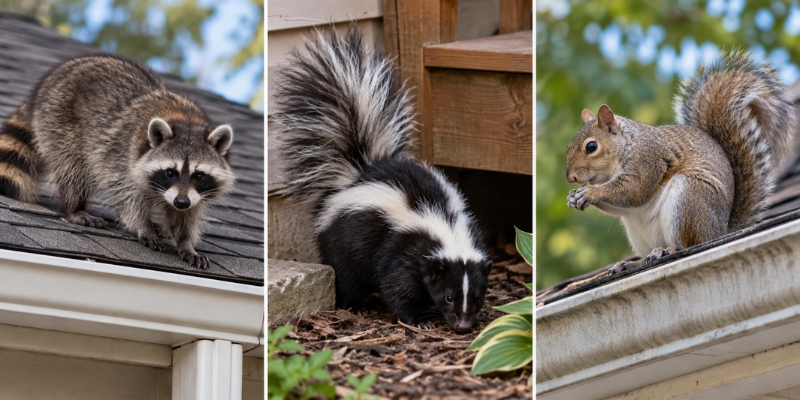
Raccoons, skunks, and squirrels can create very different problems around a Farmington property. A raccoon may knock over a trash container, a skunk may shelter beneath a porch or shed, and a squirrel may enter an attic and damage insulation or wiring. The right next step depends on the animal, where it is moving, and whether it is protecting a den or nest. At Larry’s Pest Patrol, our technicians provide wildlife control in Farmington, identify the animal and its access route, and explain how to protect the building while addressing the situation safely.
Raccoons Leave Strong, Physical Evidence
Raccoons are capable climbers with dexterous front paws. They may open unsecured trash containers, disturb pet food, pull at vents, or use a damaged roof edge to investigate an attic. Tracks resemble small handprints, usually with five long toes. Droppings may accumulate in a repeated outdoor location.
A raccoon on the roof may be traveling across the structure or investigating an attic opening. Watch where it goes and listen for heavy movement overhead. Check soffits, vents, roof intersections, and other elevated openings from the ground. Avoid climbing onto the roof or approaching a cornered animal.
Skunks Commonly Use Ground-Level Shelter
Skunks may forage across a lawn at night for insects and other food. Digging can leave small cone-shaped holes in turf. A stronger, repeated odor near one section of the house can indicate travel or shelter beneath a porch, deck, shed, or low addition.
Closing the opening immediately can separate a mother from a young or trap an animal inside. Observe from a distance and note the time and direction of movement. Keep dogs leashed after dark while the location is evaluated. Bright lights, noise, and attempts to chase the animal can increase the chance of spraying.
Squirrels Usually Point You Upward
Squirrel activity is often most noticeable during daylight, especially in the morning. You may hear running, rolling, or gnawing above a ceiling. Outside, watch for travel along fences, trees, utility lines, and roof edges. A chewed vent, loose fascia, or gap at a roof return can provide access.
The timing and sound help separate squirrels from nocturnal rodents. Birds can also create daytime fluttering and scratching in vents or attic spaces. A technician may use exterior evidence, nesting material, droppings, entry wear, and the location of sounds to identify the likely animal.
Respond Safely When Wildlife Is Close
Use distance as your first safety tool. Bring children and pets indoors and give the animal a clear escape route. Avoid direct handling, feeding, cornering, or attempting to capture wildlife in a household container.
Prompt professional guidance is appropriate when an animal enters the living area, behaves unusually, or appears unable to move normally. Repeated movement through a roof, vent, crawl-space opening, or area beneath a structure also deserves attention. Report young animals that appear to be separated from an adult, along with damaged wiring, vents, insulation, building materials, droppings, or nesting material in a frequently used area.
Local and state rules can affect how wildlife is captured, relocated, or otherwise managed. A professional can select an approach suited to the species, season, and location, using the inspection findings to guide the method.
Remove the Resources That Invite Repeat Visits
Secure trash and recycling containers with fitted lids. Feed pets indoors and bring bowls inside after use. Clean spilled birdseed, collect fallen fruit, and protect compost. Outdoor feeding can teach wildlife to revisit the same property, even after the original shelter is closed.
Trim branches that rest on the roof where practical, and have damaged vents, fascia, soffits, or screens corrected. Use a chimney cap suited to the structure. At ground level, remove clutter and inspect the edges of decks and sheds. Exclusion should occur after the animal’s status is known and the space is confirmed clear.
Cleanup and Repair Follow Removal
Wildlife can compress insulation, tear flexible duct material, soil surfaces, and damage entry points. The full scope often becomes clear after the animal is gone. Photograph the area, preserve obvious tracks or entry evidence, and ask which repairs belong to pest service and which require a roofer, electrician, cleanup company, or other contractor.
The wildlife control services from Larry’s Pest Control address animals such as raccoons, skunks, and squirrels. We can identify the species involved and develop a practical plan for your structure and surrounding property.
When wildlife repeatedly approaches your home or begins using a protected space, contact Larry’s Pest Control to request an inspection before the activity leads to additional damage.