 U.S. Veteran Owned Business

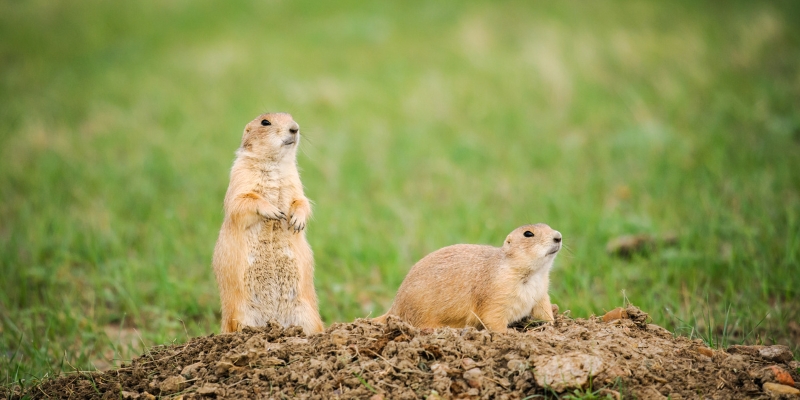
Fall gives San Juan County property owners a good opportunity to inspect acreage, residential lots, and managed landscapes for fresh mounds, open burrows, thinning turf, and disturbed soil. Prairie dogs and pocket gophers leave different signs and require different control plans, so identifying the animal comes before choosing a treatment. At Larry’s Pest Patrol, our technicians can inspect the affected areas, determine how widely the damage extends, and recommend gopher and prairie dog control in San Juan County based on the signs found on your property.
Start With the Shape of the Damage
Prairie dogs live in social colonies. Their burrow systems usually include visible openings connected to areas where vegetation has been clipped short. You may see several animals above ground during daylight, hear alarm calls, or notice an expanding group of entrances across an open area. Continued excavation can leave uneven ground around lawns, pastures, roadsides, and other maintained spaces.
Pocket gophers are solitary and spend nearly all their time below ground. They push loose soil to the surface while extending feeding tunnels, creating fan-shaped or crescent-shaped mounds. The entrance is generally plugged, so an open hole beside every mound is uncommon. Plant damage may appear along the tunnel network as gophers feed on roots and pull vegetation underground.
A property can support both animals, and old mounds can remain after activity moves elsewhere. Flattening a small section of loose soil and watching for new excavation can help show whether the system is active. A technician can read the mound pattern, inspect fresh soil, and define the working area before recommending service.
Fall Timing Is Different for Prairie Dogs and Gophers
Gunnison’s prairie dogs occur in northwestern New Mexico and spend the coldest portion of the year below ground. Their exact dormancy timing shifts with elevation, weather, age, and local conditions, but activity generally drops as fall progresses and remains limited through winter. September and October provide a useful window for observing occupied entrances while the animals are still appearing above ground.
Pocket gophers remain active throughout the year. Their winter work can be less obvious if vegetation is dormant or the property is visited less often, yet fresh soil may continue appearing during mild stretches. A fall response can reduce active tunneling around vulnerable lawns, irrigation components, trees, and planted beds before attention shifts away from the landscape for winter.
This seasonal difference is important. A quiet prairie dog colony during the coldest months may reflect dormancy, while a lack of visible gopher activity can simply mean tunneling is occurring in a less noticeable part of the property.
Map the Active Area Before Work Begins
A quick property map helps distinguish a few isolated signs from a developing problem. Walk the site in daylight and mark the following:
- Fresh mounds or newly opened burrows
- Areas where grass or ornamental plants are thinning
- Soil deposited beside sidewalks, curbs, fences, sheds, or irrigation lines
- Holes near animal areas, play spaces, equipment routes, and other high-use zones
- Sections where activity appears to cross a property boundary
Photographs taken from the same location every few days can reveal expansion. Include a fixed landmark in the frame so the scale is easy to compare. Avoid collapsing, flooding, or filling active burrows before the inspection. Altering the entrances can make the occupied portion of the system harder to identify and may encourage excavation in another direction.
Reduce Conditions That Complicate Control
Burrowing activity rarely stays inside a neat rectangle. Prairie dog colonies can extend across adjacent parcels, and gopher tunnels can run beneath fences or landscape edges. Talk with neighboring property owners when the pattern clearly crosses a boundary. Coordinated timing may reduce rapid reinvasion from untreated ground.
Keep grass and weeds at a manageable height where appropriate so fresh signs remain visible. Repair leaking irrigation equipment and avoid overwatering isolated patches, since soft soil and vigorous plant growth can influence where gophers feed and dig. Protect exposed irrigation wiring or tubing from landscape damage, and mark underground utilities before any project that involves digging.
Large properties deserve priorities. Activity beside a low-use outer boundary may call for a different response than burrows around a walkway, athletic area, livestock enclosure, or maintained lawn. A useful plan identifies the highest-concern locations first and establishes how the property will be monitored afterward.
Professional Control Follows Identification and Site Conditions
Control choices depend on the animal, occupied area, nearby structures, surrounding land, property use, and applicable rules. A method suited to an isolated pocket gopher tunnel may make little sense for a prairie dog colony. Wildlife presence, domestic animals, children, irrigation, and access also affect how service should be planned.
At Larry’s Pest Control, we provide burrowing-pest service as part of our residential pest control options for San Juan County properties. Our inspection can confirm the likely animal, identify current activity, and establish a reasonable treatment and follow-up approach.
If new mounds or burrow entrances are spreading across your property this fall, contact Larry’s Pest Control to request an inspection while the active pattern is still easy to document.
